

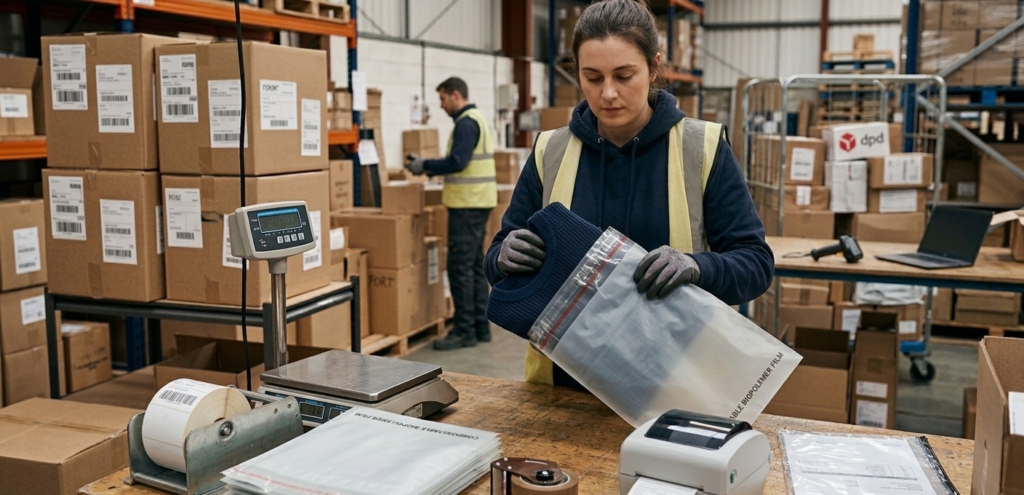
Can You Use Compostable Packaging Bags for International Shipments?
Switching from plastic courier bags to compostable ones may sound like a simple change on the surface, but it’s not so when it comes to international shipping.
Exporters, ecommerce brands, and operations teams have to juggle multiple concerns at once.
They have to confirm if the compostable packaging can stay intact across long transit, customs inspections, changing temperatures, and rough handling without creating new problems.
There is also the question of whether or not these compostable bags are legally allowed in the country the shipment is going to. The packaging must comply with the country’s regulations.
In most cases, you can use compostable packaging bags for shipping internationally. But the outcome depends on the bag itself and on how it is used.
The word “compostable” alone does not tell you whether a bag is suitable for export. What matters is how the film is made, how thick it is, what certification it carries, and how it has been stored and handled.
Here, I’ll address the major concerns businesses have about shipping internationally with compostable packaging and whether it can lead to issues.
What Are Compostable Packaging Bags?
Conventional courier bags are made from a petroleum-based plastic called polyethylene. They are tough and cheap. And these bags stay stable for a long time.
Compostable plastic bags are made in a completely different way. Instead of polyethylene, they are usually made from compostable biopolymers such as:
- PLA: made from plant sugars.
- PBAT: a compostable polymer often blended in to improve flexibility and strength.
Many real-world compostable films are blends like PBAT. That’s because one material alone rarely offers the strength, stretch, and sealing you need in a compostable courier bag.
Regulations matter a great deal, too. In India, compostable plastics are not a free-for-all.
If a product is sold or supplied as “compostable,” it is expected to meet recognized compostability standards. And it must be certified through a national system, like the CPCB.
The regulatory scenario is similar in the EU and UK as well. EN 13432 is the common reference standard used for compostable packaging in Europe, and UK practice typically aligns with the same benchmark.
In the US, compostability is usually tied to ASTM standards like D6400 (for compostable plastics). Labeling rules can also depend on the state you sell into, not just the country.
This is why the first step is always the same. Don’t start with the word “compostable.” Start with what the bag is made of, what standard it meets, and what proof exists.
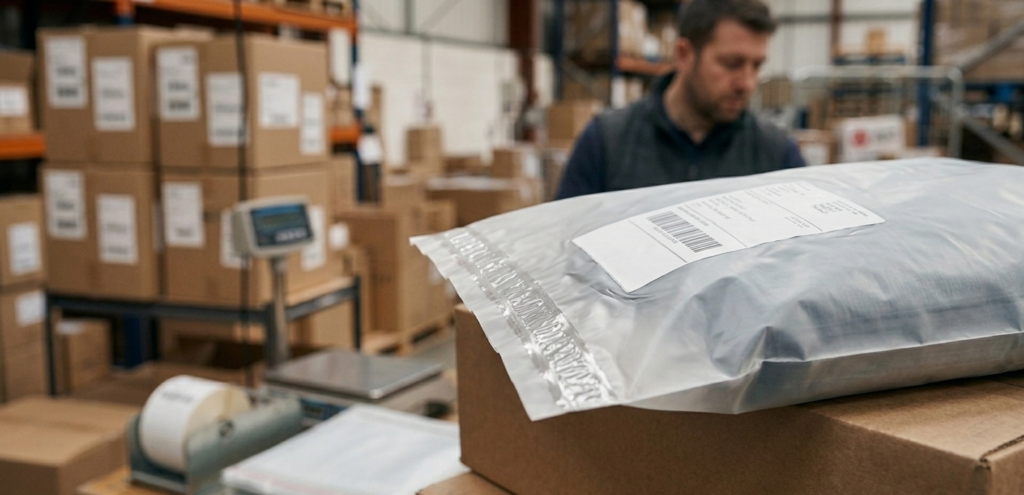
Can Compostable Packaging Bags Be Used for International Shipping?
In most cases, yes. You can use compostable packaging bags for shipping internationally. But the bag must perform like a standard courier bag, and your labeling must be in order.
Carriers and logistics partners are not going to check whether the outer mailer is polyethylene or compostable. They care about very practical things like:
- Will the bag stay properly sealed?
- Is it sturdy enough to protect the product?
- Will the shipping label stay readable?
- Can it handle stacking and handling?
If the compostable packaging clears these checks, it generally moves like any other courier pack.
That’s why many exporters are already using compostable shipping bags. These are especially popular for categories like apparel and other lightweight goods.
Large logistics operators are also experimenting with alternatives. Amazon, for instance, has trialled bio-based delivery bags in Europe. These were designed to remain durable and weather-resistant during deliveries.
Now, here’s the practical catch. Compostable mailer bags that work for local deliveries can still fail during the longer transit of an international shipment.
So, when sourcing compostable packaging bags for shipping internationally, you need to check how thick the film is, how strong the seal is, whether the label sticks well, and how durable the bag is on the whole.
Are Compostable Bags Strong Enough for Long-Distance Shipping?
As a material, polyethylene is forgiving. That’s why conventional plastic bags stretch well and don’t tear easily. So, they can withstand rough handling.
Compostable shipping bags can have the same qualities only when they are specifically designed that way.
So, how do manufacturers ensure the compostable courier bags are strong enough for international shipping? Here are a few ways:
They’re Made from a Blend
Most strong compostable mailers are made from blends because these bags need two things at once:
- The bags must hold shape and not split under stress.
- The bags must stay flexible when the parcel is stacked or squeezed.
That’s why you’ll often see blends built around PLA and PBAT. PLA helps with structure. PBAT helps with flex and tear resistance.
If the blend is poorly balanced, you’ll notice it immediately in operations. The bag may feel stiff, the corners may start tearing, or the film may split when the parcel is compressed.
Film Design Matters as Much as the Resin
How the film is produced and converted into the final product also matters a great deal. When shipping long-distances, weaknesses may show up as:
- Small tears that start at the edges.
- Punctures that form near the corners.
- The film stretches too much around the area of the seal.
That’s why getting the thickness right is crucial. A thin compostable bag might work for local deliveries. But it may not be able to withstand the multiple handovers that occur during international shipments.
Also, two bags can be the same thickness and still behave differently. That depends on how evenly the film has been made and how consistent the material mix is across the roll.
Seal Strength is Everything
In shipping, bags usually fail at the joints, not in the middle of the film. Let’s look at the most common problems we often see with weak compostable bags:
- Side seams split when the parcel is stretched or compressed.
- Seals open when bags are pulled during sorting or handling.
- Tamper seals fail because they weren’t designed to carry heavy loads.
This is why seal quality matters as much as film quality. Even if the film is strong, weak seals can cause the bag to fail during transport.
For international shipping, seals need to hold up through sorting, stacking, vibration, and repeated handling.
Studies comparing compostable films with conventional LDPE prove something crucial. It shows that with the right formulation, compostable films can achieve the same tensile strength as conventional plastic.
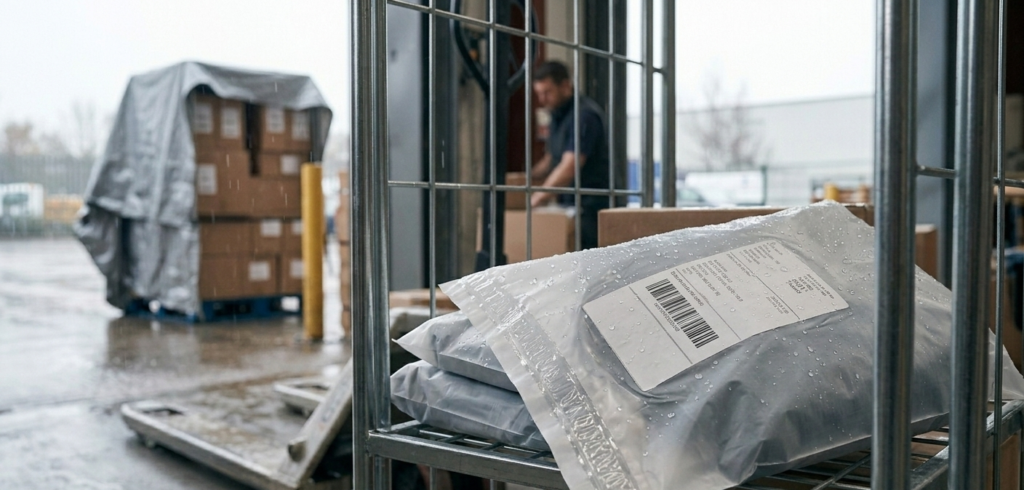
How Do Compostable Bags Perform in Different Shipping Conditions?
Once the strength is clear, the next concern is simpler. What happens to the bag when it’s being shipped out? International shipments usually involve:
- Longer transit time.
- More handovers.
- Longer time sitting in storage.
- Changes in temperature and humidity.
So, teams worry about whether the compostable bag will start breaking down during shipping. In normal shipping conditions, it does not.
A certified compostable bag is designed to break down in an industrial composting system, not inside a container or a courier van. The bags require heat and biological activity for composting.
However, environmental conditions do matter. Here’s how compostable bags react to different environmental factors:
Humidity and Rain Exposure
Compostable mailers can handle typical humidity and short rain exposure the way plastic mailers do. But if your parcel sits in wet conditions for long periods, any flexible mailer can weaken. The risk is higher if:
- The bag is too thin.
- Seals are weak.
- The parcel is heavy.
Extreme humidity can also make the label come loose. If the label starts peeling or if the barcode gets smudged, it can create a significant delivery issue.
Drastic Changes in Temperature
During an international shipment, some heat exposure is to be expected. Containers sit in the sun. Parcels sit on tarmacs. Warehouses are not always temperature-controlled.
A good compostable bag should remain stable through this. But storage and handling before use matter a lot here.
If bags are kept for months in a hot warehouse or exposed to direct sunlight, the film can lose some of its strength and flexibility.
This is why manufacturers specify basic storage rules:
- Store in a cool, dry place.
- Keep away from direct sunlight.
- Avoid long storage in high heat.
If you follow these, performance stays predictable.
Do International Shipping Regulations Allow Compostable Packaging?
Compostable mailers are not automatically disallowed just because they are compostable. Customs and carriers usually focus on the goods and the paperwork.
They care about safe packaging, correct labels, and accurate declarations. So, for apparel and other non-hazardous goods, the outer mailer material is rarely the reason a shipment gets held.
The bigger regulatory risk is the claim on the bag. If your mailer says “compostable” or “biodegradable,” you’re making an environmental claim.
In the EU and UK, the bags must comply with the EN 13432 standard. In the US, it’s the ASTM standards, though labeling rules can vary by state and retailer. In India, the bags must be CPCB certified.
If you’re sourcing compostable mailers for export, ask your supplier for the actual certification documents. A serious supplier should be able to show you the necessary documents.
At Murth, we usually support buyers the same way. We share the certification paperwork upfront and clarify whether the bags are suited for local or international shipments.
When Are Compostable Packaging Bags a Good Choice for International Shipments?
Compostable mailers work best when the outer bag is doing a simple job. It has to hold the order, carry the label, and handle normal handling. It is not meant to protect a fragile product on its own.
That is why eco-friendly shipping bags are most commonly adopted first in categories like:
- Apparel
- Textiles
- Fashion accessories
- Other lightweight, non-fragile consumer goods
For these shipments, switching to compostable mailer bags usually doesn’t require a change in your packing process. The product is often already inside an inner bag or wrap. The mailer is just the outer shipping layer.
Conclusion
If you’re planning to make the switch, do it in steps. Start with one product type that already ships well in mailers, like apparel or soft goods.
Pick one export route you know. Run a short trial and check the basics like seal strength, bag tearing, label hold in humidity, and how parcels look after handling.
At the same time, keep certification and documentation ready so your compostable claim can be backed up if a buyer asks. Once the trial works, you can standardise the bag spec and roll it out more widely.