

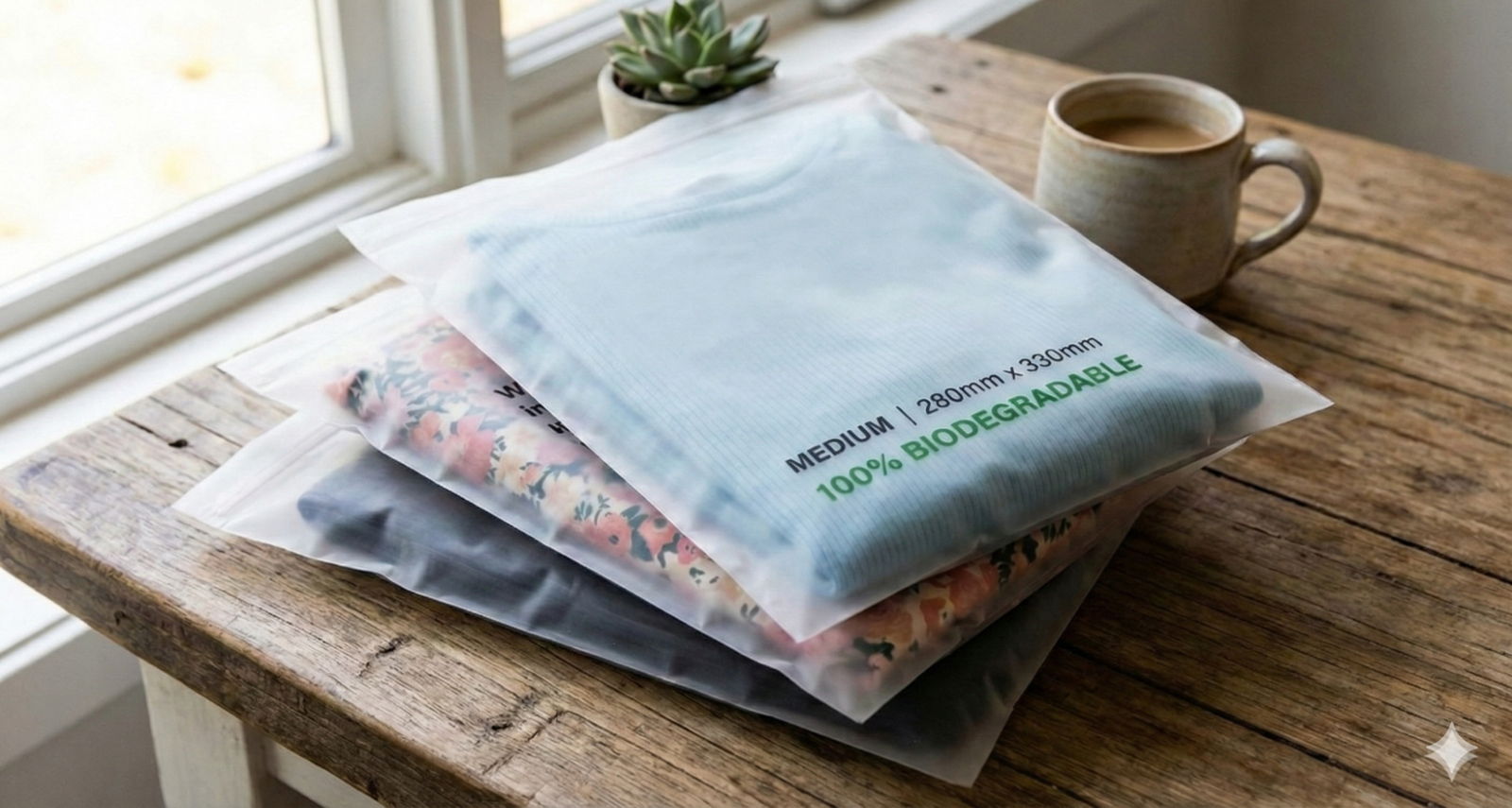
If you are in the fashion, retail, or e-commerce business, you must have noticed how the demand for compostable garment bags in India is rapidly increasing. Today, the way you package your products directly reflects your brand’s commitment to sustainability and environmental responsibility.
The younger generation is becoming increasingly eco-conscious and prefers brands that use sustainable packaging solutions. As an apparel manufacturer, retailer, or trader, sourcing high-quality compostable garment bags in bulk has become an important business decision.
But where can you find reliable suppliers? How do you ensure the bags meet your quality, certification, and branding requirements? This guide will help you understand how to source compostable garment bags in India with confidence.
Who Sells Compostable Garment Bags in Bulk in India?
When searching for biodegradable garment packaging suppliers in India, you’ll discover several types of sellers. Each supplier category serves different business needs depending on your budget, customization requirements, and order quantity.
Understanding these supplier categories will help you choose the right partner for your packaging needs.
What Are the Main Seller Types?
Suppliers of compostable garment bags in India generally fall into four main categories. Each offers its own advantages based on pricing, production capacity, and services.
Primary Manufacturers
Primary manufacturers are eco-friendly garment bag producers that own their manufacturing facilities and production machinery. They convert certified compostable raw materials such as corn starch, PLA (Polylactic Acid), and PBAT (Polybutylene Adipate Terephthalate) into compostable film before manufacturing finished garment bags.
Since these companies manufacture the bags themselves, they usually offer the most competitive pricing. They can also provide extensive customization, including custom sizes, printed logos, zip-lock options, garment hanger holes, and branded packaging.
However, manufacturers generally require higher minimum order quantities (MOQs), typically starting from around 500 kg (0.5 tonnes) or more. They are therefore the preferred choice for apparel brands, exporters, wholesalers, retailers, and businesses with regular bulk packaging requirements.
B2B Online Marketplaces
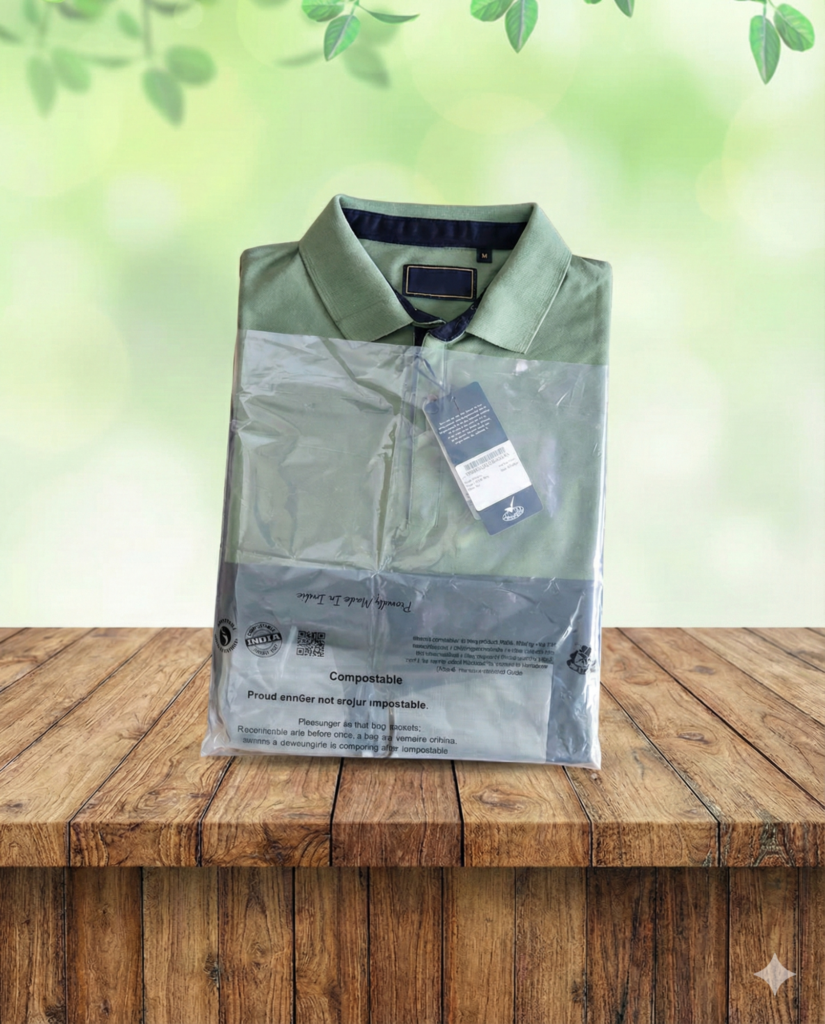
Trade platforms like IndiaMART are among the easiest places to find eco-friendly garment poly bag manufacturers in India. These marketplaces allow you to compare multiple suppliers, request quotations, evaluate product specifications, and negotiate pricing—all from a single platform.
They are particularly useful for businesses exploring different vendors before committing to long-term bulk orders.
Specialized Eco-Packaging Wholesalers
If your business doesn’t require factory-level order quantities, specialized eco-packaging wholesalers are an excellent option. These suppliers purchase compostable packaging in bulk directly from manufacturers and resell it in smaller quantities suitable for retailers, startups, and growing brands.
Many wholesalers also provide value-added services such as custom printing, logo branding, size recommendations, and packaging consultation to help businesses choose the most suitable compostable garment bags.
Now that you understand the market structure, let’s explore some of the leading compostable garment bag suppliers in India.
Which Are the Top Compostable Garment Bags Suppliers in India?
India is home to several reputable biodegradable garment packaging manufacturers. Among them, Murth, based in Faridabad (NCR), has established itself as one of the leading suppliers serving both domestic and international brands. Other well-known names include Eco365, Truegreen, EnviGreen, Ecolastic, and Earthsoul.
| Brand | Base / Region | Core Focus | Key Details |
|---|---|---|---|
| Murth | Faridabad, NCR | Bulk compostable packaging bags | Pan-India delivery, leading manufacturer and distributor focused on retail and industrial packaging. |
| Eco365 | Bengaluru | Certified compostable bags | Ready-made products, fast delivery, and standard SKUs. |
| Truegreen | Ahmedabad | PLA bioplastic & compostable bags | Large-scale manufacturing with export capabilities and strong certifications. |
| EnviGreen | Bengaluru | Organic plastic alternatives | Known for innovative edible and compostable bags. |
| Ecolastic | Hyderabad | Corn starch compostable bags | Custom OEM manufacturing and G20/DRDO partner. |
| Biogreen | Bengaluru | Compostable packaging solutions | Wide product range with export-focused operations. |
| Earthsoul | Hyderabad / Mumbai | Bags, tableware & packaging films | Offers flexible compostable packaging across India. |
| Eco Bags India | Online B2B | Biodegradable packaging | Solutions for food, retail, and commercial businesses. |
| Greenware | Marketplace | Carry bags & garbage bags | Competitive pricing with a B2B business model. |
| Pack8 | Navi Mumbai | Sustainable transit packaging | E-commerce mailers and paper-based packaging solutions. |
Choosing the right supplier involves much more than simply comparing prices. Let’s look at the key factors you should evaluate before placing a bulk order.
How Do You Choose the Right Supplier for Your Needs?
A reliable supplier should consistently deliver certified products, maintain quality standards, and ensure timely deliveries. Consider the following factors before finalizing your supplier.
Customer Reviews
Always review customer feedback before selecting a supplier. Established manufacturers such as Murth and Eco365 have built strong reputations over the years by consistently delivering quality products and dependable service.
A supplier’s credibility is especially important because false sustainability claims or poor-quality packaging can negatively impact your brand’s reputation.
Sample Verification
Request product samples before placing a bulk order. Test different sizes and bag types for durability, sealing strength, print quality, transparency, and overall finish.
Where possible, conduct laboratory testing to verify compostability certifications and perform real-world usage tests. Only proceed with a large purchase once you’re confident the bags meet your quality and performance requirements.
Location and Shipping Costs
Shipping costs can significantly affect your overall packaging budget, especially when ordering in bulk. Since India is geographically large, transporting compostable garment bags over long distances may increase freight charges.
Whenever possible, choose a supplier located in your state or a neighbouring region. For example, if your business operates in Jaipur, sourcing from a nearby manufacturer may be more economical than ordering from Odisha or another distant state.
Minimum Order Quantity (MOQ)
Most manufacturers sell compostable garment bags by weight rather than by individual pieces. On average, one kilogram contains approximately 40 bags of 50-micron thickness, although the exact quantity depends on the bag size and specifications.
Large manufacturers typically require a minimum order of around 200 kilograms. If you’re a startup or a growing apparel brand, consider suppliers or wholesalers that offer smaller order quantities between 50 and 100 kilograms.
Lead Times
Lead time refers to the period required for a supplier to manufacture and deliver your order. Compostable garment bags often require longer production timelines than conventional plastic bags because they use certified compostable materials and undergo additional quality checks.
Always confirm the estimated manufacturing and delivery schedule before placing an order, especially if you have seasonal launches or fixed shipping deadlines.
Once you’ve shortlisted a supplier, the next step is verifying whether the products genuinely meet the required quality and compliance standards.
How to Verify Quality and Compliance Before You Order
Not every packaging product marketed as “green” is genuinely compostable. Before placing a bulk order, verify that your supplier complies with India’s regulatory requirements and internationally recognized compostability standards.
CPCB Certification
The Central Pollution Control Board (CPCB) certification is one of the most important requirements for compostable plastic products in India. Every legal manufacturer of compostable bags must possess a valid CPCB registration number.
Always ask your supplier to provide their certification details before finalizing your purchase.
IS/ISO 17088 Standard
The IS/ISO 17088 standard confirms that compostable plastic products have been laboratory tested to decompose into natural compost without leaving harmful residues or toxic chemicals.
If you plan to export your products, ensure that the packaging also complies with internationally accepted standards such as ASTM D6400 (United States) and EN 13432 (European Union).
According to Indian regulations, every certified compostable bag must clearly display the manufacturer’s name, CPCB registration number, and the word “COMPOSTABLE” on the packaging.
The Future of Compostable Packaging for Indian Apparel
Compostable garment bags are rapidly becoming the preferred packaging solution for India’s fashion, retail, and e-commerce industries. As environmental regulations continue to evolve and consumers increasingly demand sustainable packaging, compostable alternatives are expected to become the industry standard.
Partnering with a trusted manufacturer today ensures that your business remains compliant, environmentally responsible, and prepared for future regulatory changes. Choose a supplier that can scale production, maintain consistent quality, and support your brand’s long-term sustainability goals.
Frequently Asked Questions
You can purchase compostable garment bags directly from CPCB-certified manufacturers such as Murth and Truegreen. For smaller quantities, B2B marketplaces like IndiaMART offer multiple verified suppliers and resellers.
Before placing an order, verify the following:
- CPCB certification and registration number.
- IS/ISO 17088 certification for products sold in India.
- ASTM D6400 and EN 13432 certifications if exporting internationally.
- The type of compostable material used and its compostability rate.
- Product quality through physical sample testing.
The price depends on factors such as bag size, thickness, raw material, customization, and printing. On average, compostable garment bags cost between ₹220 and ₹300 per kilogram.
Most manufacturers require a minimum order of approximately 200 kilograms (around 8,000 bags), while wholesalers and resellers often supply smaller quantities starting from 50 kilograms.
The GST on certified compostable bags in India is currently 5%, reduced from the earlier 18%, making sustainable packaging more affordable for businesses across industries.