

Bioplastic Carry Bags in India: Why the Price Gap With Regular Plastic Is Closing
You’ve finally done it. You’ve set up your home composting system, separated your kitchen scraps, and invested in what you thought were “green” bags.
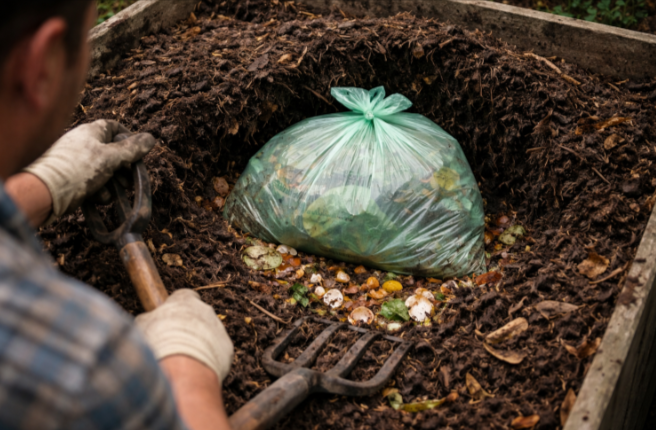
6 months later, you dig into your pile only to find the bag looking exactly as it did the day you bought it. Stubbornly intact, staring back at you like a plastic mummy. It is a frustrating moment that makes many people want to give up on sustainability.
But the problem isn’t composting, it’s the packaging. This blog will tell you exactly what to buy and what to avoid to find truly compostable bags for compost bin use.
Decoding the Label: What Do The Terms Actually Mean
In the world of “eco-friendly” marketing, terms are often thrown around interchangeably to confuse the buyer. However, from a material science perspective, they are worlds apart. Before you check the compostable bags price, you need to know what you are actually paying for.
- Green/Eco-Friendly: These are purely marketing terms with no legal definition or testing requirements.
- Oxo-degradable: This is standard plastic with an additive that breaks it into microplastics. It is arguably worse than regular plastic.
- Bio-based: This means the bag contains plant material, but it could still be mixed with non-degradable synthetic plastic.
- Biodegradable: A vague term meaning the material breaks down eventually. However, there is no specific timeframe or safety standard for the soil.
- Compostable: The only term that guarantees the bag will turn into nutrient-rich biomass within a specific window without leaving toxins.
So, the only right legal and technically correct term you should look for is “Compostable.” Specifically, it must be certified to disintegrate in a composting environment. If a bag says anything else, it probably doesn’t belong in your compost bin.
What To Look For When Buying Compostable Bags
A lot of people ask me, “I look online or offline and end up being confused by the 10+ options for compostable bags near me. Which one do I select?”
Well, don’t just look at the color of the bag. Use the following five parameters to ensure you are getting the real deal.
CPCB Registration and License Number
In India, the Central Pollution Control Board (CPCB) mandates that every genuine compostable bag must have a registration number printed on it. This is your first line of defense. If a brand cannot provide a CPCB certificate number, they are likely selling “greenwashed” plastic. This number ensures the manufacturer is audited and the material is verified.
IS/ISO 17088 Certification
This is the technical gold standard. The compostable bags meaning is officially defined by the IS/ISO 17088 standard in India. This certification proves that the bag has passed four critical tests:
- It breaks down chemically
- It physically disappears
- It has no heavy metals
- It doesn’t kill the plants that grow in the resulting compost
The “Home Compostable” Verification
Many bags are “Industrial Compostable,” meaning they need 60°C heat to break down. For a kitchen bin, you specifically need “Home Compostable” verification. This ensures the bag will vanish in the ambient temperatures of a typical Indian household compost pile or a ceramic khamba.
Here’s how industrial and home compostable bags differ:
| Feature | Industrial Compostable Bags | Home Compostable Bags |
| Required Heat | High (55–60°C) | Ambient (25–35°C) |
| Breakdown Time | 90 days (In Factory) | 180 days (In Your Bin) |
| Best For | Municipal waste plants | Compostable bags for compost bin |
Manufacturer Transparency
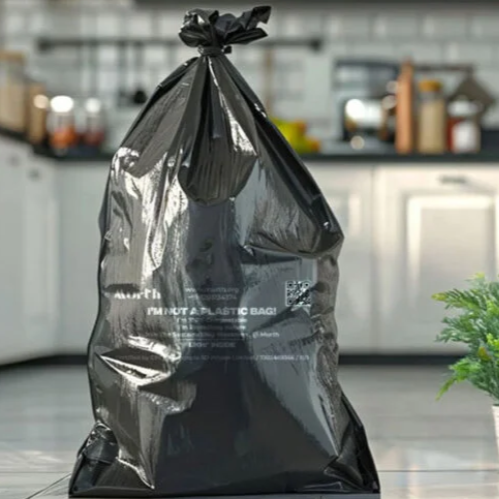
Does the company tell you what the bag is made of? Authentic sustainable packaging companies in India will be proud to mention their source materials, like corn starch or hemp fibers. For example, Murth’s compostable garbage bags are made of Ukhi’s proprietary bio-polymers called Ecogran.
If the material source is a “secret,” treat that as a red flag.
Breathability and Texture
True compostable bags for compost bin use have a specific “silky” or matte feel. They aren’t loud and crinkly like a potato chip packet. They are also naturally breathable. If a bag feels exactly like a high-gloss grocery bag, it might contain hidden polyethylene.
Red Flags to Avoid When Looking for Compostable Bags
While looking for options, the market is full of traps. Here is what you should avoid at all costs to protect your soil health.
1. The “Biodegradable” vs. “Compostable” Trap
As I mentioned earlier, never buy a bag that only says “biodegradable.” I’ve seen countless “biodegradable” bags that are just plastic in disguise. They fragment into microplastics that stay in your soil for centuries. Only “Compostable” is a regulated term that protects your compost pile.
2. Excessive Thickness (Micron Count)
If a bag is very thick (say above 40 or 50 microns) it is likely designed for industrial use. For a home bin, a thick bag will take years to break down. You want something between 20 to 30 microns. It needs to be strong enough to hold your waste but thin enough for microbes to start “eating” it immediately.
3. Unverified Imports
Many people end up buying imported compostable bags even when they are just searching for compostable bags near me. These bags only carry foreign certifications like “US BPI” without an Indian CPCB license. But soil microbes and humidity levels in India are different.
So, you need a product tested and verified for the Indian climate to ensure it doesn’t turn into a sticky mess in the monsoon or fail to degrade in our heat.
4. Artificial Scents and Fragrances
Some brands add heavy perfumes to mask the smell of waste. Often, these chemicals are synthetic and not good for your compost. A good compostable bag is breathable, which naturally reduces odors by preventing the “rotting” smell associated with anaerobic conditions in sealed plastic.
5. The “Too Cheap” Price Tag
If the compostable bags price is the same as regular black plastic garbage bags, run away. Sure the price gap between regular and compostable bioplastic bags is closing up but it is not the same, yet. High-quality plant starches and agro-waste fibers cost more than subsidized crude oil. A suspiciously low price usually means the bag is a blend of plastic and starch, which will never fully compost.
The Honest Truth: Limitations of Compostable Bags
I am an advocate of compostable bioplastic materials, but I will always give you the honest truth. Compostable bags are biological products, not indestructible synthetics. They have limitations that you must understand to use them successfully. Here’s what you should be aware of:
1. Shelf Life
Unlike plastic, which lasts for decades on a shelf, compostable rubbish bags have an expiry date. They are designed to degrade. Generally, you should use your bags within 10 to 12 months of purchase. After this, they may start to lose their tensile strength and tear more easily as the natural polymers begin to break down.
2. Storage Requirements
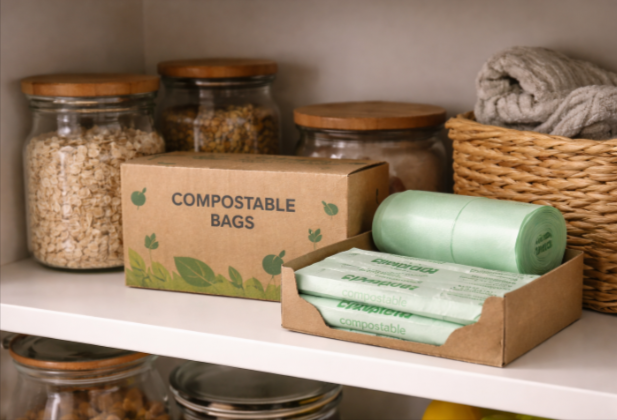
You cannot store these bags in a hot, damp cupboard under the sink or in direct sunlight. Because they respond to heat and moisture, poor storage will “trigger” the degradation process early. Keep them in a cool, dry place in their original packaging to ensure they stay strong until the day you need them.
When you understand these limitations, you can make sure you use the compostable bags as intended and actually make a positive contribution.
Building a Better Bin: The Final Verdict
Composting is an act of love for the planet. Don’t let bad packaging spoil it.
When you choose the right compostable bags for compost bin use, you are completing the circle of life. You are ensuring that your kitchen waste returns to the earth as nutrients, not as a pile of microplastics.
At Murth, we’ve balanced the compostable bags price with genuine, home-grade performance. We don’t use “secrets”. We use science and agricultural waste to help you compost with confidence.
So, stop guessing and start composting correctly. Explore the Murth range of certified compostable bags for compost bin use today and feel the “Murth difference” in your own garden.
FAQs
Can I put “compostable” bags in my society’s green dry-waste bin?
Usually no. Compostable bags belong with “Wet Waste.” If they go into the dry recycling stream, they can actually contaminate the recyclable plastic. Always check your local municipality’s rules for compostable rubbish bags.
Why do some compostable bags feel “sweaty” or damp on the outside?
This is actually a sign of high quality. Unlike plastic, compostable materials are “breathable.” They allow moisture from your food scraps to evaporate, which prevents the waste from rotting and smelling bad inside the bag. This breathable nature is a key to composability.
Are there compostable bags near me that are safe for pet waste?
While the bags are compostable, most home compost bins do not reach high enough temperatures to kill pathogens in pet waste. We recommend using Murth compostable rubbish bags for pet waste only if you are using a dedicated “pet-waste only” composting system or a deep-burial method. For standard garden compost, it is best to keep pet waste out.