

Compostable Bags Wholesale in India: What to Check Before You Place a Bulk Order
A bag can be claimed to be “eco-friendly” all day. But a real compostable bag has to meet verified testing standards and legal certification.
And since the demand for compostable bags is rising, with the global market projected to grow from about $10.2 billion in 2025 to over $22 billion by 2032, buying compostable bags in India looks easy enough at first. A quick search throws up dozens of compostable bags suppliers.
But many brands that rush into a bulk order in India end up with stock they cannot use. They get bags stamped “biodegradable” but not certified or worse, a film that splits under load and ends up unusable.
I have spent the last decade building Murth’s compostable packaging line. The lesson is to remember that a smart decision starts with screening for five hard facts, in addition to price. Certification, material composition, film strength, shelf life, and traceable labeling.
So, let’s look at these checks one by one. But, first, understand the difference between compostable vs biodegradable bags.
Compostable vs Biodegradable bags: Is there a difference?
Compostable and biodegradable bags are not the same.
Many listings swap the words “biodegradable” and “compostable.” But they are very different terms.
Compostable means:
- Tested to IS 17088.
- Breaks down in industrial or well-managed home compost into water, carbon dioxide, and biomass.
- Leaves no toxic metals above set limits (lead < 50 ppm, cadmium < 0.5 ppm).
Biodegradable on its own means nothing. A supplier can print the word without passing a single test.
What certifications should you check before placing an order for compostable bags?
India’s Plastic Waste Management Rules require IS 17088 compliance. This standard sets the technical rules of how compostable bags decompose under controlled composting conditions.
Other common standards used by international compostable bag manufacturers are ASTM D6400, EN 13432, and TÜV OK Compost.
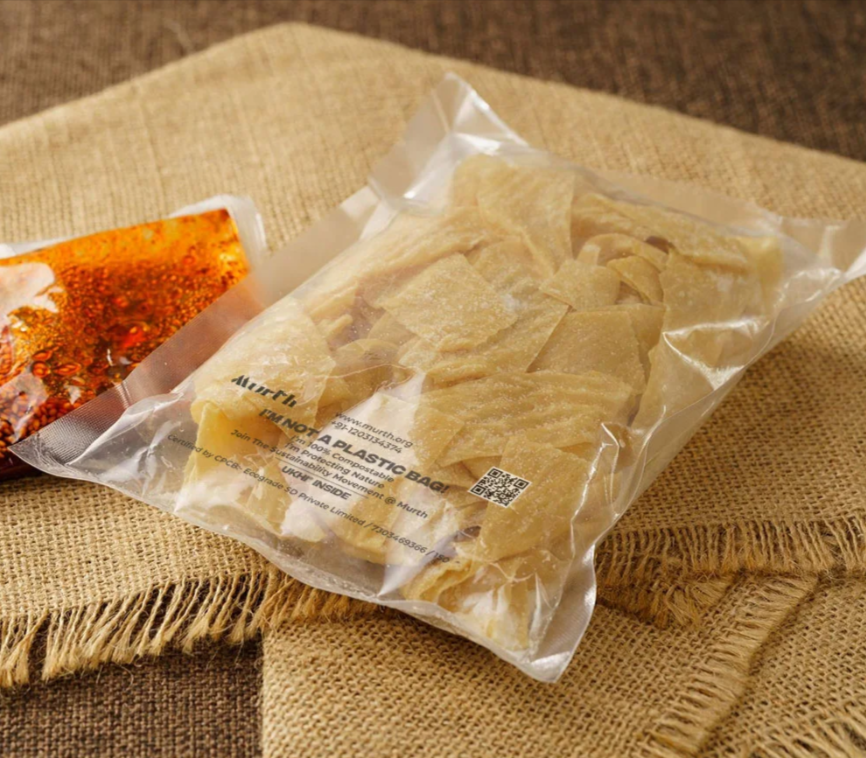
CPCB certifies compostable bioplastic products if the bag passes the certification only if at least 90 % of its carbon converts to carbon dioxide in a controlled compost within 180 days, and less than 10 % residue remains after 84 days.
So, before placing an order for compostable bags from a manufacture always ask for:
- Certificate number and issue date.
- The resin formulation list stamped by the test lab.
- A QR or code sample printed on the bag, which is also required since the 2021 traceability update.
What materials are compostable bags made from?
Another step is to check the biopolymer resin that the compostable bag is made from. Most compostable film are:
- PLA, PBAT, starch blends,
- PBS variants, or
- high-amylose starch compounds.
Ask for the biodegradation graph from the lab test. A straight line to 90 % conversion is hard to fake.
Once you trust the material, turn to the next detail, the bag’s physical strength.
What compostable bag specifics should you verify before ordering?
Another filter to select compostable bags for your business, be it retail packaging or waste collection is bag strength and performance.
Here are some parameters to check for:
Thickness (µm)
Conventional plastic carry bags moved to over 120 µm in 2021. Compostable bags do not share that fixed number but most retail carries need 40-50 µm to hold 5 kg safely.
Load and drop strength
Test a random sample with a 5 kg sand load from 1 m height. Five drops, zero tears, or reject the lot.
Puncture resistance
At least 200g gives good safety for garment compostable bags.
Heat-seal window
PLA-PBAT blends seal between 90 °C and 120 °C. You should always ask and check the exact range so your pack line stays in safe operating limits.
And most importantly check which bag property matches to the use case.
For instance, a retail carry bag needs tear strength more than clarity. A courier bag needs puncture strength and a tamper seal. And garbage liners need moisture resistance and leak-free bottom seals.
Run a 1 % pilot batch through your actual process. You will learn more from one working day than from five PDF reports
But another factor you might want to check first is the shelf life of compostable bags.
How long can you store compostable bags?
You also have to find out the storage life and shelf stability of compostable bags before ordering in bulk. Usually, most compostable bags are best for around 12 months under cool and dry storage.
Ordering a large quantity before knowing the exact conditions to store compostable bags can cost you a lot of wasted inventory and money. In hot or humid storage areas, the bags can become sticky or brittle before they are even used.
So, it is best to check the manufacturing date, shelf life, and recommended storage conditions before placing a large order.
How to compare prices when buying compostable bags wholesale?
Most of the quotes that you might get from compostable bags suppliers are per bag prices. But that hides the real cost.
When comparing compostable bags price in India, compare offers on one sheet.
| What to compare | Ask the supplier for |
| Certification | CPCB certificate number $ IS 17088 test report |
| Bag weight | grams per bag at the quoted thickness |
| Failure rate | sample run results: tear, seal, drop test |
| Print and traceability | “COMPOSTABLE”, IS 17088, certificate number, QR code |
Compostable bags usually cost more than conventional plastic. Some estimates put the premium at 30 to 50 percent. Treat it as a starting range, not a rule.
At Murth, we offer compostable bags made that can cost less than many conventional plastic bags.
Our standard ecommerce bag cost around ₹1.05 to ₹1.66 per piece, while a similar plastic carry bag can cost about ₹4.61.
The same pattern appears across other products like garment bags and industrial pouches.
Businesses that distribute 1,000 bags a month can save over ₹3,000 by switching.
Murth supplies compostable material used to produce CPCB-approved bags that match plastic in strength, so you can switch without changing machines or packing processes..
Overall, buying compostable bags wholesale India is a compliance decision first and a procurement decision second.
Start with the law. India’s Plastic Waste Management Rules require compostable carry bags to meet IS 17088 and require sellers or manufacturers to obtain a CPCB certificate before marketing or selling.
Then verify the basics:
- certificate and test report
- true compostable claims, not loose “biodegradable” labels
- film specs that match your use case
- supplier capacity to repeat quality at volume
- labeling that stands up to scrutiny
That is how bulk compostable bag orders stay safe and usable.
FAQs
What certifications prove a compostable bag is legal in India?
A CPCB certificate is mostly required for a compostable bag to stay legal and approved for sale in India. The CPCB certificate confirms IS 17088 test compliance.
What is the GST rate on certified compostable bags?
India applies 12 percent GST on certified compostable carry bags under HSN 39232190. Confirm the rate with your accountant because state incentives can lower the net tax for bulk orders purchased through registered channels today.
How many compostable bags fit in one kilogram?
Divide 1000 grams by the bag weight. Fifty-gram bags yield twenty per kilogram; lighter film lifts the count upward.
Which material blend delivers the best certified compostable film?
Most Indian converters rely on PLA, PBAT and starch blends. That mix passes IS 17088, seals at low heat, and resists tearing, making it safe for retail, courier, and waste liner applications across humid routes in every season.