

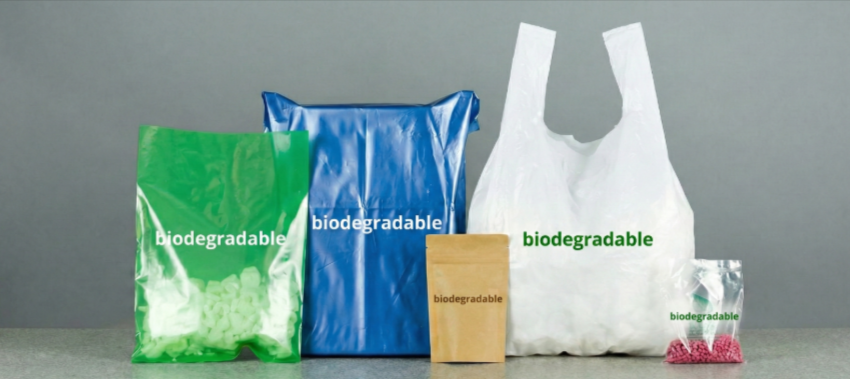
10 Types of Biodegradable Packaging for Every Indian Business
India generates about 10 million tons of plastic waste annually. Both literally and biologically, plastic waste is choking us to death.
It is imperative to shift to biodegradable packaging in India. The move is not about making a statement alone. Customers are looking for responsible packaging, while the government has introduced a ban on single-use plastics. Businesses have to adopt better alternatives since law, market dynamics, and consumer sentiment alike demand the change. If you want your brand to last, biodegradable packaging in India is no longer an option.
In this article, I will introduce you to ten types of biodegradable packaging that offer practical and eco-friendly solutions for Indian businesses.
What Are the 10 Types of Biodegradable Packaging Every Indian Business Should Know?
Biodegradable packaging is not a single product but a broad set of materials. Most biodegradable plastic bags are sourced from various plants and agri-waste-based sources, including:
- Sugarcane Bagasse
- Starch-based Plants (Hemp and Corn)
- Bamboo and Agricultural Straw
- Jute and Organic Cotton
But why so many types? Because each type of biodegradable plastic has its own strength and unique applications. Some work best for food, others are more durable and perfect for shipping. The key is to match the packaging to the product.
Let us walk through the ten most common types used by Indian businesses today.
1. Biodegradable Plastic Carry Bags
These are the everyday bags used in grocery stores, pharmacies, and local retail. They are made from compostable biopolymers such as PLA and PBAT blends. When certified, they can safely replace conventional plastic shopping bags.
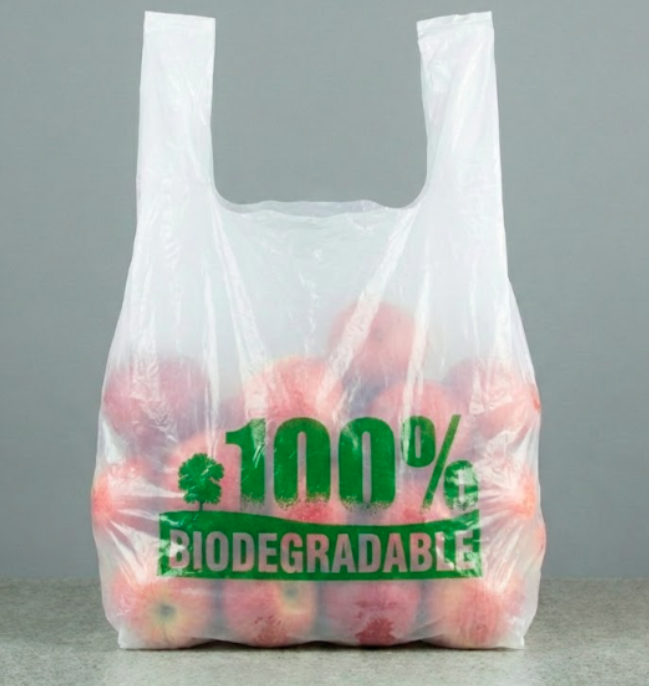
Businesses use biodegradable plastic carry bags because they look familiar. For food handling, the material must also be food-grade. These bags are often the first step companies take when moving away from conventional plastic.
2. Biodegradable Plastic Carrier Bags
Biodegradable plastic carrier bags serve a slightly different role. They are stronger, thicker, and often used by fashion stores, gift shops, and branded retail outlets. These bags carry heavier items and are usually printed with logos and messaging.
Material-wise, they come from the same compostable polymer families as carry bags. The difference lies in strength, finish, and branding options. They are ideal for businesses that care about presentation as much as sustainability.
3. Biodegradable E-commerce Mailer Bags
Biodegradable e-commerce packaging is designed specifically for shipping. They are used to courier clothing, documents, accessories, and other items. To work properly, they need to be tear-resistant, waterproof, tamper-proof, and printable.
Most biodegradable e-commerce packaging mailers are made from certified compostable films. Some brands also use paper mailers with compostable padding. These bags are now common among direct-to-consumer brands because they reduce plastic waste.
4. Biodegradable Plastic Bin Bags
Bin bags play a quiet but critical role in waste management. Restaurants, hotels, offices, and housing societies rely on them to collect daily waste. Many cities encourage compostable bin liners, especially for wet waste, because they keep organic waste streams cleaner.
Certified compostable bin bags use the same materials as other biodegradable plastic bags, but in thicker formats. Using the right bin bag is not just about sustainability, but better downstream waste processing.
5. Biodegradable Eco-Friendly Food Packaging
Food packaging is where biodegradable materials have seen the fastest adoption. Containers, trays, bowls, plates, and cutlery made from bagasse, PLA, cornstarch, and coated paper are now common across India. Bagasse, from sugarcane residue, works well for hot and oily foods. PLA is often used for cold items and transparent containers.
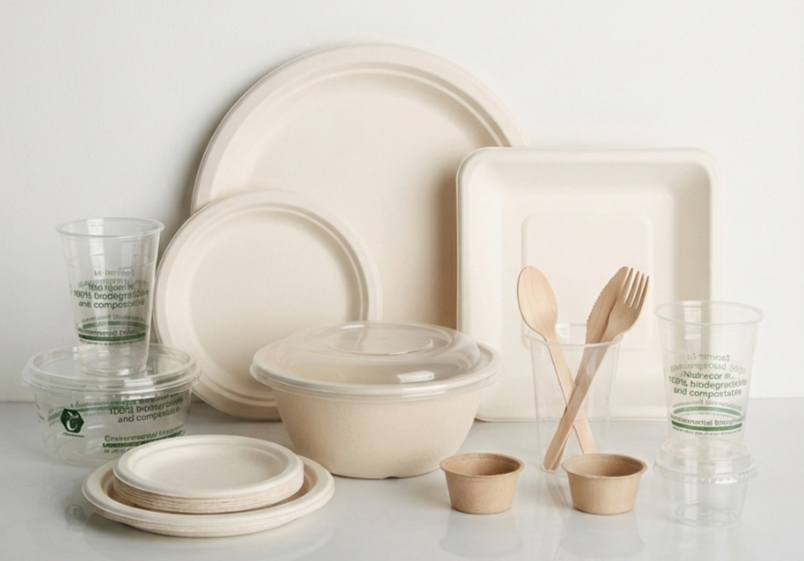
When done right, biodegradable, eco-friendly food packaging reduces waste without compromising food safety.
6. Biodegradable Pouches and Wrappers
Flexible packaging is harder to replace, but progress is being made. New compostable pouches and wrappers are used for snacks, tea, cosmetics, and dry goods. These materials aim to balance shelf life with compostability.
Businesses must be careful here. Not all products suit compostable films, and shelf life testing is essential. Brands that choose this route usually do so to align packaging with a sustainability-focused positioning.
7. Biodegradable Bubble Wrap and Cushioning
Protective packaging does not have to be plastic. Businesses shipping fragile items now use cushioning made from molded pulp, plant starch, and paper-based honeycomb structures. These alternatives are excellent at absorbing shock and breaks down after use. They also remove one of the most visible plastic elements from e-commerce shipments.
For electronics, glassware, and décor items, this switch makes a strong impression on customers.
8. Biodegradable Cling Film and Stretch Wrap
Cling and stretch films are essential in food service and logistics. Biodegradable versions are made from compostable polymer blends that can wrap food or secure pallets during transport.
For food contact, safety approvals are critical. For logistics use, strength and stretch performance must match conventional films. These films are still evolving, but adoption is growing.
9. Bioplastics Packaging
Bioplastics include materials such as PLA, PBAT, and their blends. They can be molded into cups, trays, cutlery, films, and many other forms. Some bioplastics are compostable. Others are bio-based but not biodegradable.
For businesses, the key is clarity. If compostability is claimed, certification must support it. When selected carefully, bioplastics packaging offers flexibility that paper or fiber cannot.
10. Biodegradable Paper Packaging
Paper remains one of the easiest materials to adopt. Boxes, envelopes, paper shopping bags, and cartons are widely accepted and easy to recycle. When made from recycled or certified sources, they offer strong sustainability credentials.
For food and greasy products, paper can be coated with compostable barriers. Many businesses start their sustainability journey here because paper is familiar, scalable, and widely available.
What Certifications and Standards Do You Need to Check?
The biggest problem is not the material but confusion. Biodegradable and compostable, these terms are used loosely by sellers, creating confusion.
Here’s what you need to check:
Biodegradable vs Compostable
- “Biodegradable” means it will break down eventually. Such as – the discarded skin of a mango will eventually decompose.
- “Compostable” means it will turn into safe, non-toxic compost under a given set of conditions.
Key Certifications
ISO 17088 is the gold standard for compostable materials in India. It requires:
- Disintegration within 12 weeks
- Over 90% biodegradation within 6 months
- Zero toxic leftovers after breaking down
- No leaching of heavy metals into soil
EN 13432 (Europe) and ASTM D6400 (USA) are very similar and useful if you are exporting your products.
Here’s a quick checklist for your reference:
| Requirement | Why It Matters | Where to Check |
| ISO 17088 Certificate | Legal for “compostable” claim | Supplier docs & CPCB list |
| CPCB Registration | Compliance for India sales | CPCB Certified Sellers |
| Food-Contact Approval | Food packaging safety | FSSAI, lab reports |
| Test Report (Full) | Verifies biodegradability speed | Accredited lab, supplier |
How Indian Businesses Should Choose
The right type of biodegradable packaging depends on:
- What you sell
- How it is shipped
- What happens after disposal
Retail brands often start with compostable carry bags made from PBAT and similar formulations. Food businesses rely on bagasse, PLA, and coated paper.
There are numerous manufacturers and suppliers in India, including Murth, Greendot Biopak, and Truegreen, that offer premium products at reasonable prices.
Besides, you can compare resellers of biodegradable e-commerce packaging on B2B platforms such as IndiaMART. Be sure the product carries clear instructions for end-of-life disposal.
Frequently Asked Questions
Why should Indian businesses use biodegradable plastic carry bags?
The reasons for the use of biodegradable plastic bags are threefold:
- From 2022, there is a ban on single-use plastics.
- India suffers from a huge plastic pollution crisis.
- Consumers want to buy from brands that are eco-friendly.
Can biodegradable packaging be used for food?
Certainly. Biodegradable food packaging is available as rigid, thermoformed containers and food trays. They have a food-grade coating that improves performance.
What are some real-world examples of biodegradable packaging for Indian businesses?
The market for biodegradable packaging is growing in India. There are several examples of biodegradable packaging, including:
- Food packaging and cutlery
- Biodegradable e-commerce packaging
- Compostable courier bags
- Protective films and biodegradable wraps.
Is biodegradable packaging more expensive than plastic?
Yes, it is about 2 – 3 times more expensive at the moment. As demand grows and manufacturing is scaled up, the cost will be at par with conventional plastic items.
How long does biodegradable packaging take to decompose?
The time taken for decomposition of biodegradable plastic bags varies by material and conditions. Paper and bagasse can decompose in weeks to a few months. Bioplastics may take up to six months in industrial composting facilities.