

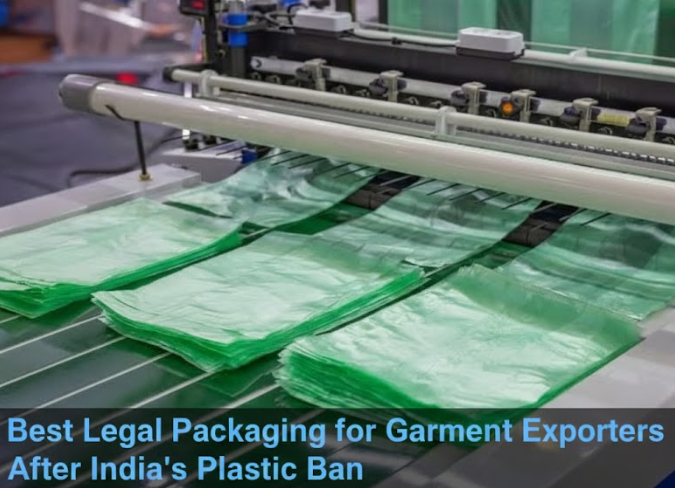
Best Legal Packaging for Garment Exporters After India’s Plastic Ban
When people export garments from India, packaging is often treated as a minor detail. Something that just needs to protect the product. But packaging is not exempt from Indian laws, even when the shipment is going abroad.
Banned items remain banned. Thickness rules still apply. Documentation and traceability requirements remain intact.
This is not just theory. Authorities across India have already conducted over 8.6 lakh inspections, seized nearly 2,000 tonnes of illegal plastic, and penalized thousands of non-compliant businesses under the single-use plastic ban.

That’s why conversations around legal packaging for garment exporters are important. In this blog, I explain,
- What is actually banned
- What you can still legally use
- How exporters can build packaging systems that are both compliant and commercially practical
Read on to know how you can navigate this packaging transition.
What Type of Packaging Is Actually Banned in India?
To understand the Indian plastic ban packaging rules, you need to know what is prohibited. The government has not banned all plastic. But specific categories of low-utility and hard-to-recycle items are banned.
Unfortunately, many of these still show up in export packaging. So here’s what you need to steer clear from:
Thin plastic carry bags
Any carry bag below 120 microns (and certain non-woven bags below 60 GSM) is prohibited. That’s because these materials are difficult to collect, sort, and recycle. Even when used only as inner or secondary packaging, these bags remain illegal. Using them can create compliance risks under the India plastic ban packaging rules.
Certain single-use plastic items
Cutlery, plates, straws, stirrers, polystyrene foam, and similar disposable items are banned. These sometimes appear in accessory kits, promotional inserts, or gift packaging for garments. Including them (even unintentionally!) can put exporters at a serious risk of non-compliance.
Non-certified “biodegradable” or “oxo-degradable” plastics
Many materials are marketed as biodegradable without proper certification. These often fragment into microplastics rather than fully breaking down. Such materials are not recognized as compostable under Indian standards. They are treated as regular plastic, making their claims legally risky.
Non-compliant packaging without documentation
It’s crucial for suppliers to have EPR registration details, material declarations, and proof that everything’s compliant. If a supplier can’t provide these docs, that packaging is considered high-risk. Legally speaking, not having the right documentation is already a sign of compliance failure.
For exporters, export packaging compliance in India isn’t just a regulatory concern. It also affects buyer perception and brand image.
What You Can Legally Use
While some materials are banned, many others are still permitted. Provided they meet specific conditions. Understanding this helps ensure legal packaging for garment exporters that can stand up to future audits.
Thick mono-material plastic bags
Plastics such as LDPE or PP are allowed when they are made from a single material type. Under current Indian rules, plastic carry bags must also be at least 120 microns thick. Mono-material formats are preferred because they can be recycled through existing systems. However, these bags must be properly declared, traceable, and covered under EPR compliance for packaging in India. This makes supplier documentation equally essential.
Certified compostable materials
Certified compostables are allowed when they meet Indian compostability standards. These materials must fully break down without leaving harmful residues. When used correctly, compostable packaging for clothing can reduce environmental impact. But again, certification and correct labelling are essential.
Paper-based packaging
Recycled kraft paper, corrugated boxes, paper mailers, and sleeves are widely accepted. These materials are easy to recycle and well understood by global waste systems.
Reusable textile packaging
Fabric pouches, cotton bags, and jute sleeves are among all compliant options. What’s even better is that these are also often appreciated by premium buyers too. They shift packaging from a disposable mindset to a reusable one. That aligns well with modern sustainability goals too.
Practical Packaging Mix for Exporters
In my experience, most exporters don’t need a single “perfect” material. What they need is a practical system.
Inner Layer: Direct Garment Protection
This layer protects the garment from dust, moisture, and handling damage. Options for this include:
- Certified compostable garment bags
- Lightweight recyclable LDPE bags
- Tissue paper wraps

If plastic is used, it should be minimal, compliant, and mono-material.
Middle Layer: Sorting and Grouping
This includes size-based pouches, bundle sleeves, or paper envelopes. Paper-based materials work well here. They also help reduce overall plastic use without compromising organization.
Outer Layer: Transport and Shipping
Corrugated cartons, paper mailers, and reinforced boxes are the safest choices here. These should be strong enough to handle international shipping while remaining recyclable. Minimal plastic tape should be used. Use paper-based tape where feasible.
This layered approach to eco-friendly packaging for textile exporters ensures 100% compliance, without any operational disruption.
Best Practices to Ensure Compliance
Building compliant systems is not about one-time changes. It’s about process discipline. Here’s how you can ensure that your garment packaging remains compliant:
1. Work only with documented suppliers
Your packaging supplier should be able to provide details like:
-
- EPR registration details
- Material specifications
- Recycled content declarations
- Compostability certifications (where relevant)
Without this documentation, your risk exposure increases significantly, especially as enforcement tightens.
2. Avoid vague sustainability claims
Words like “green,” “eco-friendly,” or “biodegradable” can be legally risky if not backed by standards. Clear, specific language supported by certification protects you from accusations of greenwashing. Plus, it helps align buyer expectations too.

3. Design for destination-country rules
What works in India may not work in Germany, the UK, or the US. Compostables, for instance, are not universally accepted. True export packaging compliance in India and abroad requires understanding where your packaging will end up and how it will be treated there.
4. Prepare for traceability requirements
From 2025 onward, traceability has become mandatory for many packaging formats. This means unique IDs, QR codes, and digital reporting. Exporters who prepare early will face fewer disruptions.
5. Audit your packaging periodically
Rules and laws change, and buyer standards evolve even faster. So make sure you conduct internal packaging audits every year. This will help you identify risks before they become problems. Each of these practices contributes to long-term EPR compliance for packaging in India. That also ensures your customers see you as a sustainable & trustworthy garment supplier.
Getting Started with Compliant Packaging
Going forward, the companies that really get ahead in exports will be those that view compliance as a strategy rather than just a headache.
At Murth, we’ve noticed that exporters who jump on the sustainable packaging trend for garment exports tend to do better overall. They face fewer pushbacks from buyers and tackle audits with less hassle. Plus, they’re able to forge stronger relationships with their customers for the long haul.
Our focus has always been on helping brands transition to certified, compliant alternatives. We pride ourselves in offering solutions that are practical, not performative.
If you are just starting out, begin by mapping every packaging component you use today. Identify what is banned, what is risky, and what is future-proof. Then replace step by step.
That is how legal packaging for garment exporters becomes manageable, not overwhelming.
FAQs
Is there a total ban on plastic for garment exports from India?
Not really. In India, only specific single-use items and thin plastics are banned. There are still many types of plastics that can be used if certain conditions are met.
Are compostable bags always better than plastic?
Not always. Compostable packaging for clothing needs to be certified, properly labeled, and suitable for the waste systems of the destination country.
Do exporters actually have to follow the plastic regulations in India?
Absolutely. The laws in India apply no matter if the product is being sold locally or exported.
What is EPR and why is it important?
Extended Producer Responsibility places the responsibility of waste management on the producer. EPR compliance for packaging in India influences choices about suppliers, along with documentation and reporting requirements.
What’s the best long-term strategy?
The key is to create packaging that is minimal, recyclable, well-documented, and meets the acceptance criteria of international buyers.